Tuesday, March 25, 2014

All that sparkles is not always Champagne

Young Chardonnay grapes await ripening
at Iron Horse Vineyards.
For that important toast or prior to a reception, Champagne or sparkling wine is a tradition enjoyed by everyone.
But not all that a sparkle – or bubbles – is necessarily Champagne. For a bubbly wine to be called “Champagne,” it must hail form the Champagne region of France and meet that country’s requirements for labeling. Al other bubbles from around the world carry their own designation.
In America, bubbly wines are called “sparkling wines.” Italy has its own highly effervescent wines in “Prosecco,” and from Spain comes delicious and fizzy “Cava.”
And if you venture away from the Motherland of bubbles – France – you’re likely to find great tasting sparklers and much better values.
Our friend Tim Rutherford of Savannafoodie.com, has written about wine for more than decade and has a great bottom line thought on bubbles:
“I would much rather have an amazing bottle of Prosecco or Cava – or a superb American sparkling wine – than a bargain basement French Champagne.”
With that in mind, let’s take a look at each style – but first, let’s go in armed with some basic knowledge.
On Champagne in particular and other bubblies generally, there will be some indication on the label as to level of sweetness. You’re like to see these phrases – and here’s what it means:
Brut less than 15 gram of sugar per liter (dry, this is the typical style of Champagne with no sweetness) Extra-Dry 12-20 gram of sugar per liter (still dry with a hint of sweetness or slightly sweet)
Sec 17-35 gram of sugar per liter (medium sweet)
Demi-Sec 33-55 gram of sugar per liter (sweet)
The level you choose is up to you and your specific tastes. Brut is the most common Champagne chosen for a toast – but it is necessarily required that a toast Champagne be dry. Remember, it’s your special day – drink what you enjoy.
Sparkling wines are typically made from one of three grape varieties – or a blend of these varieties. Each grape has its role:
Pinot Noir adds body, structure, aroma, and a complexity of flavors.
Pinot Meunier contributes fruitiness, floral aromas, and character.
Chardonnay gives freshness, delicacy, elegance, and finesse. For this reason, many producers make a blanc de blancs (Chardonnay) Champagne.

American Sparkling Wines
Most grape growing regions of the US have winemakers who produce a sparkling wine. For those that are closest to French style look for producers who utilize “method champenoise.” This means the process used for fermenting, aging and bottling follows traditional French practices.
Some of our favorites include:
Iron Horse: Based in Sonoma County, California, Iron Horse is known for a long history of producing some of America’s most celebrated sparkling wines – including the sparkling wine that was used to toast the historic Reagan-Gorbachev Summit Meetings ending the Cold War. However, its “Wedding Cuvee” marks those special days – and anniversaries – more than any of its labels. This is Iron Horse's Blanc de Noirs, made from predominantly Pinot Noir.
Gruet: The Gruet family has made Champagne in France for decades – but with this property near Truth or Consequence, New Mexico, produces still wines and sparkling wines from the highest elevation vineyard in North America. A large variety of vintage and non-vintage sparklers are produced, including some made with other grapes. Our favorite is Gruet NV Demi Sec – subtle fruity aromas and the freshness of the Demi-Sec drives the character of this light bodied, semi-dry sparkling wine. The palate carries through with a creamy sensation and vivid flavor of green apples, ripe pears, pineapple and a hint of mineral.
Hand-racking is part of 'methode champenoise'
practiced at Wolf Mountain Vineyard.
Destination only bubbles: If a destination wedding is in your plans, explore having your wedding on-site at an area winery – most use this alternate revenue stream as a way to bolster their wine business. For example, in North Georgia, Wolf Mountain Vineyard has a stunning, mountainside wedding pavilion and makes a variety of sparkling wines sold on-site only. The family uses method champenoise for all of its bubbles.

Prosecco
Italian sparkling wines are the domain of a handful of producers from the country’s famed Veneto region. Prosecco is a white wine that is generally dry or extra dry wine. It is normally made from the Glera grape – although some producers refer to the grape as “Prosecco.”
Labels to look for include:
Bisol Vineyard land in Italy's Veneto.
Bisol: This prominent family has been making wine around Valdobbiadene for more than five centuries. They produce a wide range – and wide price range – of Prosecco. All are delicious and representative of the region.
Carpene: Carpenè Malvolti Prosecco di Conegliano Extra Dry won a Gold Medal at the International Wine & Spirit Competition 2012. This wine is the epitome of how fine Prosecco Spumante should be: Fresh, dry, lively and deliciously grape-scented.

Cava
Spain is recognized for the great wine values it is currently producing – and its Cava is no exception.
Most Cava is produced in Catalonia – it may be white (blanco) or rosé (rosado). Only wines produced method champenoise may be labelled cava, those produced by other processes may only be called "sparkling wines" (vinos espumosos).
Labels we’ve sampled include:
Vega Barcelona: This producer’s Cava Brut Reserve is made from three Spanish grape varieties; this stunning sparkler serves up aromas and flavors of red delicious apple, pear, citrus and crème brulee.
Vinos Libre: Ya Cuvee 23 Reserva Cava is a fresh, clean Cava with a great nose, solid minerality, elegant mouth feel and a soft fresh lemon finish with very persistent bubbles.

Cheers!
Regardless of your choice – Champagne, American Sparkling Wine, Prosecco or Cava – all should be served well-chilled in flutes to show off the beautiful bubbles that dance to the surface.

Monday, March 17, 2014

When ‘Eating In” Makes Perfect Sense

As a business owner, you’ve invested a significant part of your capital in bricks and mortar. Whether you own your space or lease, you’ve no doubt created a meeting space that’s impressive to customers, comfortable to use and welcoming on an everyday basis.
So when you have special office occasions – holiday parties, retirements, the celebration of an outstanding sales quarter – why go out to an impersonal restaurant when the restaurant can come to the place you’re the most at home – in your office meeting space.
Sure, you can do it yourself. That strategy seems to be the most relaxed and economical, but think about past office shindigs – does this sound familiar?
Hey, did somebody sign up to bring ice?
This cake looks great! Do you think we can cut it with a letter opener?
All of the crockpots tripped the breaker – all of the food is cold!
Keep your paper plates for dessert – we just have enough for everyone to have ONE!
A full-on office soiree or casual lunch is far more than just food. The event calls for paper goods, plates, utensils, condiments. Food has to be kept hot – or cold. In the end, it all has to clean up quickly and efficiently – time is money!
Here at Cape Creations Catering, delivering the office lunch is one of our specialties. From simple to more elaborate – we can meet your office meal needs in a variety of ways:
Box lunches: This style of office lunch allows us to be a little more flexible in the creation of a L”lunch box.” From deli sandwiches to pitas, roll-ups to kabobs – part of the fun in lunch boxes is popping open the top to find a surprisingly delicious lunch inside. Add a cup of soup, a pasta salad or cup of fruit for variety. Of course, every box needs a sweet treat – cookies, cake or mini pudding? Lunch boxes can be all-inclusive – food, utensils, condiments and a box that serves as a “plate.” Add beverage service and the work is done. Clean up is easy.
Self-serve trays: Disposable platters are easy to clean up and provide office diners the chance to assemble a plate of their choosing. Platters can be all cold, deli-style offerings or a combination of hot meats and cold sides. Again don’t forget the tray of cookies! We provide paper goods and disposable serving utensils.
Hot Line: Lunch is by far the most popular catered affair – but we do breakfast as well. Here’s where a hot line really brings a rib-sticking treat to your co-workers. Disposable service pans stay sealed and piping hot until you’re ready to eat and then open to reveal, eggs, breakfast meats, grits, roasted potatoes – you dream it, we can do it.. An inclusive breakfast casserole, biscuits and fresh fruit makes a popular breakfast self-serve line. Hot lunches can be as close as the conference room and may encompass a variety of menus – from simple soup and sandwich to more elaborate meat and three combinations.
And remember, catered lunches aren’t just a treat for your staff. Your best customers will feel like royalty when you treat their office staff to catered lunch. Show your appreciation for their business with a stress-free office breakfast or lunch.

Monday, March 10, 2014

Guests Won't Squawk When Served a Moist, Tender Recipe With Bone-in Chicken

Fish can be fragile. Beef can be expensive – and more and more people are eating less red meat. Pork runs afoul of personal lifestyles.
But chicken…chicken can rule the roost for your special event.
The obvious go-to for chicken is the boneless chicken breast. As popular as the choice may be, it’s not without its own problems when being prepared for a crowd.
First, some history.
The boneless breast came about, in part, because it was quick to prepare. Busy restaurant chefs could give the chicken pieces a quick sear on each side then finish in a hot oven in just a few minutes. When prepared properly, this is the ideal application.
But your party of 50 – or more – cannot be served made-to-order chicken breasts. For large parties, we must think about keeping food hot, keeping meat moist and tender and delivering lots of flavor plate after plate.
The boneless chicken breast is not at its best when prepared in quantity. It tends to dry out – even when held in sauce. Plus, bone-in chicken has much more flavor than boneless breast filets.
Choosing chicken to save money is the right idea. According to price statistics from the National Chicken Council, the retail price of chicken can be just one-third the price of a comparable cut of pork and a whopping 75 percent less than beef.
So what are your options to serve chicken, save money and get the best dish possible?
Work with your professional caterer on braised chicken dishes, chicken in sauces or stews and always choose bone-in pieces. Use dark meat – thighs and legs – when possible because these higher fat pieces bring even more flavor to the table. These cooking methods will keep the chicken at its best – and allow you to introduce some international flavors to your event.

Recipe ideas
Chicken Tagine: This savory dish can use all pieces of the chicken – dark and white meat. The traditional Middle Eastern preparation incorporates rich flavors of the Med – lemon, turmeric, cinnamon, ginger, parsley and cilantro. It’s a dish that is loaded with flavor and colorful variety.
Chicken Cacciatore: This rustic, Italian-inspired chicken dish can use all parts of the chicken and brings together flavors of Tuscany: Tomatoes, garlic, olive oil, oregano and basil. This dish offers an easy and affordable wine paring option – Sangiovese or Chianti work just fine and are great values right now.
Coq au Vin: This classic French dish is a crowd pleaser for both its simplicity and its flavors. Literally “chicken in wine,” the dish marries earthy ingredients like thyme, mushrooms and pearl onions with a rich wine sauce to produce chicken pieces that are moist, tender and delicious.
Braised Chicken with Wine and Oranges: The tangy oranges in this dish blend with the sweet Muscatel wine to create a Spanish sweet-and-sour chicken. Spain is also the source of some great wine values – and this dish pairs perfectly with the popular Spanish red wine grape Tempranillo.
Beer-Braised Chicken Stew with Fava Beans and Peas: This is a perfect foundation dish for parties where there are plenty of craft beer fans. Onions, mushrooms, herbs and spices ramp up the flavor in this hearty chicken stew – that can be make only with chicken thighs. Compliment the dish with beer like a Belgian-style ale.

Wednesday, March 5, 2014

A DIY Bar Can Be Fun

Handling kitchen duties can be overwhelming for the host of a special event. That’s where caterers come in – we work on-site or prepare off-site and deliver to your home or special event venue.

Tackling bartender duties isn’t so stressful and may be a way for you express yourself and save a few bucks at your next special event. Here are some ideas for your bar needs:

Explore discounts: Most wine shops and package stores offer case discounts on every 12 bottles – and some offer a discount on just six bottles. If it’s wine crowd and the party is going for three hours, plan on nearly one bottle per guest – that’s one drink an hour. Also, work in advance with your package or wine store operator and ask them to seek out any special deals for you. Lots of wine comes to market that never sees shelf time – and many of those are bargain bottles that are just right for a large crowd.

Ask guests to pitch in: Some wine and package shops have gift registries. Instead of getting overloaded with another toaster, create a wine and liquor gift registry and let your guests pick up the tab for your favorite beverages.

Mix in bulk: You don’t want to be tied to bar-tending duties any more than you want to slave over a hot stove. Some cocktails mix well in bulk and guests can self-serve from a container with a spigot. You don’t have to be an expert mixologist to put together these recipes. And, mixing in bulk allows you to use less expensive brands of liquor and mixers bought in bulk at warehouse or discount stores.

Some ideas include:

Manhattan (Serve over ice in small rocks glass, makes 38 oz)
750 ml rye whiskey
10 oz sweet vermouth
3 oz dry vermouth
Garnish with Luxardo cherries

Whiskey or Vodka Mule (Serve over ice in small rocks glass, make 85 oz)
1 liter Vodka OR bourbon
11 oz lime juice
40 dashes of Angostura bitters
40 oz ginger beer
Garnish with lime wheels

Don’t get hung up on labels: If you are serving champagne cocktails, don’t get all hung up on the label – after all, your bubbly is about to get diluted with juice or some other mixer. Set aside that special bottle to be shared by the bride and groom – or bridal party – and use the less expensive bubbles for mixers and guests. Consider the options of sparkling wines from the US, Cava from Spain or Prosecco from Italy – you may just get more bang for your buck with bubbles from outside of France!

Beer bliss: If you are among the growing number of craft beer enthusiasts you probably know a home brewer or two. Ask your favorite homebrewer to craft a special “wedding ale” for your event. It’s a way for the brewer to show off his skills and for you to have a remarkable and one-of-a-kind beer for your event.

Measure, monitor: While no one wants to get serious at a party – you are serving alcohol and by doing so assume the risk as host. To keep consumption – and expense – in check, use small glasses or cups, make plenty of ice available for cocktails and consider cutting off alcohol service an hour or so before the party ends. Offer coffee soft drinks and water. Lastly, don’t let guests who have had too much to drink get behind the wheel. Call a cab – or arrange to have drivers available to take home guests who have had too much to drink.


Monday, February 24, 2014

Eight Ways to Trim Your Wedding Budget

All of the pieces and parts of your wedding have one thing in common: Each has a price tag.
With a little imagination, plenty of planning and thought and confidence, you can trim the budget. A little here, a little there – and the next thing you know, you’ve saved potentially thousands of dollars.

Here are some ideas.

Use a wedding coordinator: A good coordinator or planner may seem like an additional expense. However, the expertise a good coordinator brings to the event should be focused around giving you the special day you want – while saving you money.
Coordinators have long-term relationships with lots of different vendors who will often extend special pricing – because they know a coordinator’s event will be stress free.
Spend a little to save a little.

Choose a professional caterer: Yeah, that sounds a bit self-serving. Just like a wedding coordinator, a professional caterer knows how to shave a bit here and there or offer other suggestions to help keep your entertaining budget in line. Rely on the expertise of others to relax the strain on your bank account!

Invitations: One of the most common suggestions for saving a huge amount of money up front is to use handmade or inexpensively printed invitations instead of engraved invitations.
Be honest, that engraved invitation that you paid $4 each for hits the trash can as soon as your guest puts the date on the calendar. Why not ask a graphic designer friend – or your talented self – to create a one-of-a-kind invitation that can be printed on a home printer or at a printing center?
Have fun, put your personalities into the invitation – that will be much more memorable to guests than a stereotypical, engraved invitation.

Avoid guest list bloat: Early on, define who will be invited – and stick to it. Simply, invite only those who are closest to you and your partner. Do you each have lots of college friends who still live in the same town? Coordinate with them and live stream your ceremony via Skype – while those friends celebrate at a party of their own. Sen a DVD to far-flung family members.

The tunes: No wedding reception is complete without music – and we all remember the fun scenes from “The Wedding Singer.” Still, a full band can run into the thousands of dollars – a DJ will likely be a few hundred bucks and can do just as much to entertain the crowd. For a smaller affair the couple’s favorite songs assembled into a playlist and pumped over a great sound system may be plenty. Still want live musicians? Check with local musical instrument stores – they may know of a “pick-up” duo or trio who will give you live music for a few less dollars. Remember though: Musicians are professionals just like chefs and wedding coordinators – and should be paid accordingly.

Booze by the numbers: If a full bar is in your plans, pay for alcohol service by the head – not by the drink. Even casual drinkers will belly up to a free bar. A per head fee will be much better on the budget versus per drink – which can reach $7.50 per drink or more. For an early afternoon wedding – consider keeping alcohol service limited to wine and beer.

Timing is everything: An afternoon wedding allows you to reign in bar costs with just wine or beer – see above. It also allows reception food to become light appetizers and cake instead of pricier heavy apps or dinner service. Maybe a very small private ceremony is your thing. Take the honeymoon – then come back and host a big backyard BBQ for you to celebrate with friends and extended family.

Network your worries away: I’m always amazed when I post an inquiry on social media sites. Wow, I often have resources that I didn’t know I had. Maybe you have a long lost cousin who is a professional photographer – and would love to “gift” you photography. Your aunt’s best friend is a newly opened florist who will swap flowers for a business card on every guest’s seat. Your nephew is a graphic design student who needs a project – invitations!
Ask, and you will likely receive!

Monday, February 17, 2014

Choosing the Perfect Venue: Number of Guests, Budget and Personal Style are Key Elements


The decisions you must make for your special event – whether it’s a wedding or a corporate retreat – are seemingly countless. Among the most crucial decisions is the venue – where you will host your special event?

Here are some thoughts to consider when choosing a venue.

How many guests do you want, and how mobile are they?
Is this a small group or several hundred participants? And if you’re planning a destination wedding or remote retreat, are your guests willing to travel to the venue?

The number in your party can immediately trim down a list of potential venues rather quickly. The smaller the group, the more likely you are to find more venue options.

And for events requiring travel, consider the budget of your invited guests, especially those who are important to the success of the event.


Do you want a religious ceremony?
A church-based service can impact the number of guests. Churches vary a great deal in size and depending on your convictions; you may find your choice of church falls short of needs. Consider a larger facility of the same faith – but be prepared for your choice of minister to possibly share the ceremony with the host minister.

How much work are you willing
– or do you want – to take on?
The most austere of event venues can be made to sparkle with the right decorations and flowers. If you’re particularly talented in these areas and can take on the work – you’ll save a huge piece of your budget. Otherwise, know that décor and flowers can quickly add lots of extra dollars to a budget.

Size, budget – and style
OK, so you’ve found the perfect sized hall or venue, it fits your budget perfectly – but does it fit your style? Outdoorsy couple may have found the perfect hotel garden and reception hall for their big day – but does the glitz and polish of a hotel really fit their style? For this couple, an open air wedding and a reception in a state park picnic pavilion may be more their style. Likewise, the urban couple may not be very much at home with a beachside wedding. Consider style!


Public venues are magical – but often require permits
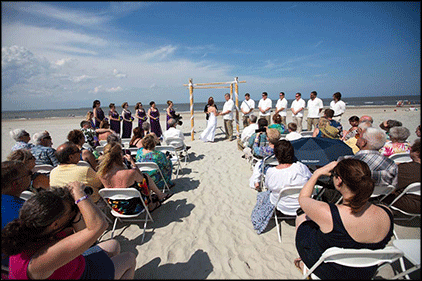
If the idea of a beach wedding or ceremony in one of Savannah’s beautiful public squares is more your style, work with a planner or make contact with city hall. Permits are often required for such events and can include other mandatory expenses like security or parking oversight. If you plan on having a reception in the same place, there may be rules and licenses required. Plan ahead and secure permits – you don’t want your event interrupted and potentially shut down for lack of permits!

This is as good a place as any to discuss alcohol service. Rules vary wildly from state to state – and city to city within a sate. Your caterer, bar caterer or alcohol provider should be able to answer questions regarding permits. In some cases, the bar caterer will have the only license necessary. In some cases, know that you may have to acquire your own special event alcohol license. Check local regulations.

Ask to see pictures of previous events
Regular event halls should have photos of past events to help you get a feel for how the space looks when set for a wedding or special event. The pictures, in fact, may not be perfect, and may illustrate difficult to decorate features of the space. Scrutinize the photos carefully.

Is it clean, well-managed and maintained?
When you visit potential venues, walk around. Look not just at the public space, but at the areas that will be used for catering, bar service and restrooms. Is it clean? Are fixtures, floors and doors well maintained and functioning? Do you see fire extinguishers, clearly marked exit signs and other indicators that the venue owner takes pride in the location?

Any restrictions on catering – and can your caterer’s needs be addressed?
Some venues have a mandatory list of caterers that must be used – or handle food service in-house. Regardless, coordinate between catering and the venue to make sure your caterer has what they need to work. If your venue, for example, does not have a working kitchen, your caterer will have to bring cooking surfaces and hot-holding vessels, which can add to your cost. Caterers need refrigeration, hot and cold running water and areas in which to handle clean-up. Trying to save a few dollars on an ill-equipped venue can come back to haunt you with a larger catering bill.


Home weddings: Is the wear and tear worth it?
I’ve been to several weddings held in private homes or on the scenic lawns of Savannah’s many waterfront homes. The events are beautiful – but are the wear and tear worth the savings of a commercial venue? I’ve seen one evening’s worth of wedding guests literally wear the paint off of a staircase bannister!

You can possibly have as many as a few hundred guests parking on the lawn, treading on gardens, interior floors and carpeting. In all likelihood, you will need to bring in portable toilet facilities to accommodate a large party. Bands or DJs will require a place for staging and have demanding electrical needs. And, again don’t forget your caterer: Will they work from the home kitchen or need to bring cooking, cleaning and hot-holding equipment?

Is there parking?
If you’re having a wedding with 150 guests in one of Savannah’s squares on a busy spring day – you will have parking issues. What began as a storybook wedding can turn into a scene from a bad movie. Elderly guests can’t be expected to walk – and loading and unloading zones will have to be managed and cleared quickly. When planning, remember that people have to get to your event in some form of transportation -- consider parking and how guests will get form cars to the venue.

What is payment policy? How about add-on charges?
Venues will require a deposit and many require full payment in advance of the event. Understand payment polices, get the pay structure in writing – and don’t forget to include details on venue cancellation policies. Some venues will have a per piece charge for chairs, tables, table cloths and other add-ons. Some venues will break out fees for things like security, valet parking, clean-up and a site manager.

A part of any venue agreement is the time prior to and following the event. This allows florists, designers, musicians and caterers time to prepare and time to break down and clean up. Any time outside of the venue’s standard access period may be charged additionally.

Know what the fees are – and know that as you continue to add these details, the budget will continue to climb.

Rain, rain, stay away!

Your outdoor event is all set – but don’t forget that you will need a Plan B in the event of rain.

What? Yes, you just added to your budget! Most large scale events with out of town guests can’t be cancelled due to rain or inclement weather. Work with a venue to be your back-up plan. 


Thanks to Savannah-based photographer Richard Burkhart for use of his photographs. Richard is a veteran photographer with experience shooting in many of the city's and region's venues. You can view his wide range of work and contact him on his website, http://photosbyrb.com/.

Sunday, February 9, 2014

Break Tradition: Put A Personal Touch, Sense of Humor Into Your Catered Event

  In the past, catered events usually went one of two ways.
  In one, guests are seated while a cadre of servers present every course on a plate in front of each guest.
From appetizers, to salads and soups and through the entrée and dessert, guests stay seated while servers scurry about. Today's plated dinners aren't nearly as ostentatious as formal service at Downton Abbey -- but can feel as stuffy to guests more accustomed to casual dining.
  In the other scenario, guests queue up to a buffet where they either self-serve or have servers scoop dishes onto each guest’s plate.
  These were great ideas and still fill the need for many catering clients. But more and more – particularly among wedding parties – brides and grooms want guests to be active, to have fun – and perhaps even experience something about the couple’s food interests or ecological beliefs.

So what are the options?
  Options are only as limited as the imaginations of the catering client and the caterer. Let’s explore some innovative and imaginative ideas!

Get Up And Move With Action Stations
  Everyone is familiar with the old-school roast beef carving station – that’s an example of an Action Station. Let’s take the idea one step further.
  How about an action station that serves guests rough-mashed potatoes – and then guests ladle on their own choice of toppings? Everyone loves a hearty dollop of sour cream and chives on a potato – or even Cheddar cheese. But expand the toppings to include exotic cheeses, mini meatballs or shredded and tender braised pork and you’ve turned the starch course into a meal.
  In the Lowcountry of Georgia and South Carolina, the ubiquitous Shrimp and Grits dish can become an action station at which guests choose from a variety of grits (stone ground, creamy or cheese grits are ideas). Offer a variety of shrimp styles. You don’t have to go all Forrest Gump, but consider the flavor variations of allowing guests to choose between shrimp scampi, grilled shrimp or shrimp in a spicy Cajun gumbo.
  The action station concept can comprise the entire event – or constitute only a portion of service. From build-your-own salad stations through the ideas listed above to make-your-own sundae stations – action stations keep guests active, engaged and happy.

Pass the Lima Beans, Please
  Embrace the Southern tradition of family-style service. Here, each table of guests is presented with platters of the menu choices and pass between one another in a self-serve style.
  Family-style service engages guests, encourages interaction and can reduce the number of service staff required for your event.
  And, just like a plated dinner, family-style service limits the amount of food going onto guest’s plates. An empty platter can mean “all gone” versus a buffet, which encourages guests to go back for “all they can eat.”
  Family-style also allows incorporation of some plated service. You might consider a plated salad, family-style main course service and a plated dessert.

Take a Culinary Safari With Ethnic Foods
  Professional caterers usually have an international repertoire of dishes. Ethnic dishes provide guests with an opportunity to explore and provide the ingredients for an event that is sure to be filled with lots of laughter, lots of oohs and aahs and a room full of happy guests.
Smoked ostrich filet.
  Ethnic options can range from passed finger foods like min-samosas or kebabs to sushi or mini banh mi. Action stations can feature tacos – but made with exotic ingredients like ground ostrich or braised pork belly. Imagine guests having a celebration around a table of a build-your-own pasta dish. Three or four styles of pasta, a variety of sauces and a few meat and vegetable options could make this the centerpiece of your event’s food service.
  If you’re serving your wedding cake as dessert, consider a small sweet bite with coffee to signal the end of the meal. A single, luxurious French-inspired chocolate truffle can make a meal memorable – and assuage guests’ sweet tooth until cake is served.

Express Your Convictions
  If the bride and groom or party host has strong views on culinary topics like sustainability, organic or local ingredients or nutrition – you have a captive audience with whom to share your beliefs through action!
  Here, the options are only limited by the event host’s beliefs and imagination. You need to work particularly close with your caterer in order to source in-season ingredients and to stay on budget. In this era, nearly anything is available by overnight shipping – but the cost may be prohibitive and quality may suffer.
  And ecological beliefs go far beyond the food. Is your caterer using disposables that are bio-degradable, compostable or made from recycled materials? Where does left over food go? With proper planning your leftovers can provide a substantial addition to a local food homeless shelter’s daily rations.

  Come to the table with imaginations turned to “high,” and an open mind. Hosting a catered event does not mean sacrificing fun or following traditional practices. This is your special event – put your special mark on it!